A1C to Average Glucose (eAG): How the Conversion Works
Understand how A1C converts to estimated average glucose in mg/dL and mmol/L, see the formula and a conversion chart, and why the numbers may differ.
An A1C result is a percentage, but the readings on a glucose meter are in mg/dL or mmol/L. Estimated average glucose, or eAG, translates one into the other so that the two can be compared. This article is for information only. It is not medical advice.
What A1C measures
A1C is a blood test that shows your average blood glucose over about the past two to three months. It measures the percentage of your hemoglobin that has glucose attached to it. A higher percentage means a higher average glucose.
The formula
The relationship comes from the A1c-Derived Average Glucose (ADAG) study, published in Diabetes Care in 2008:
eAG (mg/dL) = 28.7 × A1C − 46.7
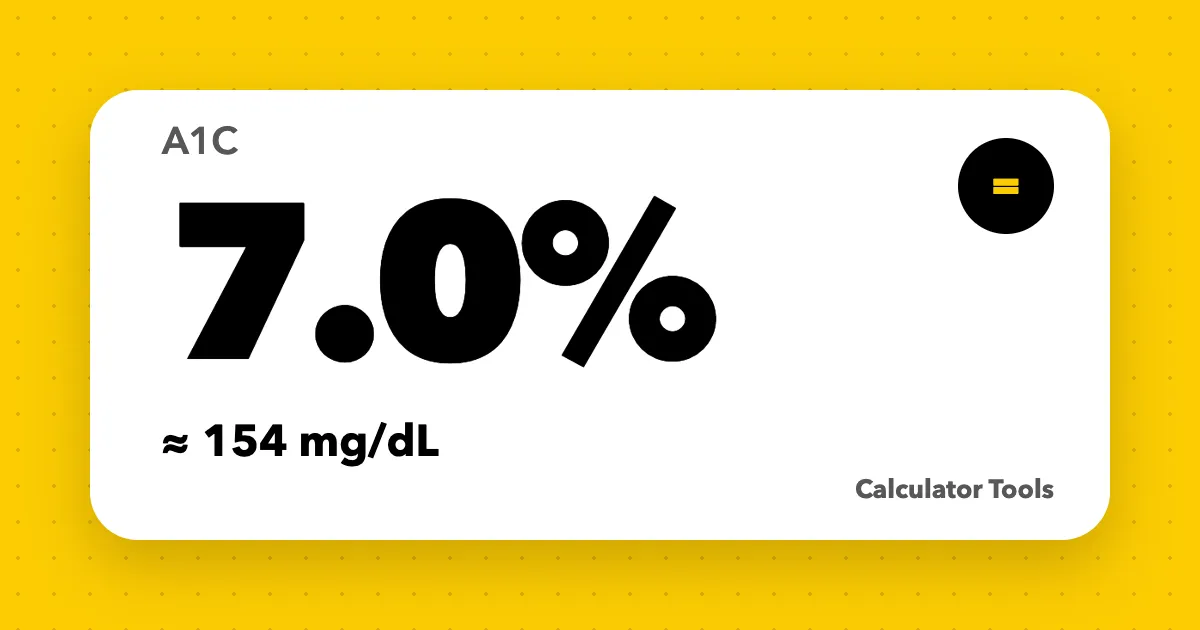
For an A1C of 7%, that is 28.7 × 7 − 46.7 = 154.2, or about 154 mg/dL. To convert to mmol/L, divide mg/dL by 18.016, which gives about 8.6 mmol/L.
To go the other way, use A1C = (eAG in mg/dL + 46.7) ÷ 28.7.
A quick conversion chart
| A1C | eAG (mg/dL) | eAG (mmol/L) |
|---|---|---|
| 6.0% | 126 | 7.0 |
| 6.5% | 140 | 7.8 |
| 7.0% | 154 | 8.6 |
| 7.5% | 169 | 9.4 |
| 8.0% | 183 | 10.2 |
| 9.0% | 212 | 11.7 |
Printed charts can differ from these figures by 0.1 mmol/L in a few rows because of rounding.
A1C in mmol/mol
Outside the United States, A1C is often reported in mmol/mol. The conversion is mmol/mol = (A1C % − 2.15) × 10.929, so 7% is about 53 mmol/mol.
Why eAG may differ from your meter
eAG is an estimate based on a large study. Your own readings depend on when and how often you test, and A1C gives more weight to recent weeks. The two are often close, but they do not have to match.
What can affect A1C
Anemia, some hemoglobin variants, recent blood loss or transfusion, pregnancy, and kidney disease can make A1C read higher or lower than your real average glucose. Ask your doctor if one of these applies to you.
A1C ranges
An A1C below 5.7% is in the normal range, 5.7% to 6.4% is in the prediabetes range, and 6.5% or higher is in the diabetes range. A diagnosis needs a laboratory test confirmed by a health care professional, and many adults with diabetes have a personal goal that you should set with your health care team.
Convert your own numbers
Try our A1C calculator to convert in either direction, in mg/dL, mmol/L, or mmol/mol.