How Body Fat Percentage Is Estimated From Measurements
See how the US Navy tape measure method and the BMI method estimate body fat, how to measure correctly, the standard ranges, and their limits.
Body fat percentage is the share of your weight that is fat. A lab scan can measure it directly, but you can also estimate it at home from a tape measure. This article is for information only and is not medical advice.
The tape measure method
The US Navy method estimates body density from your height and the difference between your waist and neck measurements. For women it also uses the hips. It then turns density into a percentage. It does not need your weight or age.
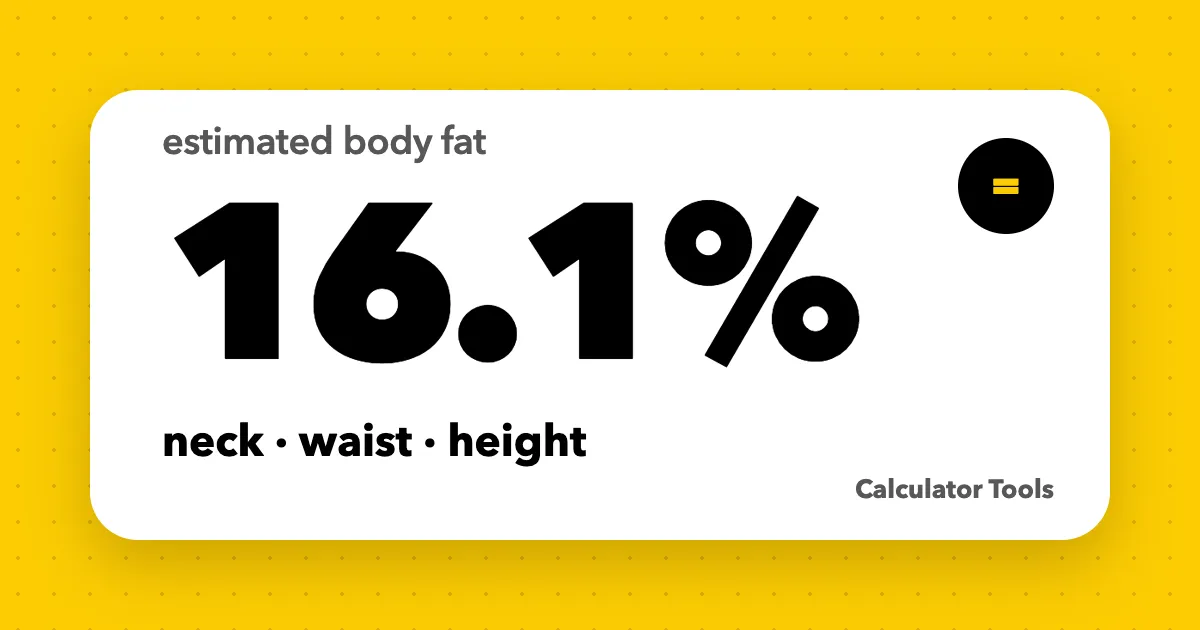
Take a man who is 180 cm tall with a 38 cm neck and an 85 cm waist. The method gives about 16.1% body fat.
The BMI method
The second approach uses a formula that combines BMI, age, and sex. For a 35-year-old man with the same height and a weight of 80 kg (a BMI of 24.7), it gives about 22.3%.
The two answers differ because they look at different things. The tape method looks at body shape, while the BMI method works from weight for height, so it cannot tell muscle from fat.
How to measure
- Neck: place the tape just below the Adam’s apple, angled slightly down toward the front. Do not flare the neck.
- Waist: men measure at the navel. Women measure at the narrowest part of the waist.
- Hips (women): measure around the widest part, keeping the tape level.
- Use a flexible tape, keep it snug without squeezing, and measure in the morning. Take each measurement twice and average them.
What the numbers mean
The American Council on Exercise ranges are:
| Category | Women | Men |
|---|---|---|
| Essential fat | 10–13% | 2–5% |
| Athletes | 14–20% | 6–13% |
| Fitness | 21–24% | 14–17% |
| Average | 25–31% | 18–24% |
| Obese | 32% and above | 25% and above |
Women have higher ranges because they need more essential fat. Using these ranges, the man in the first example is in the fitness range.
Limits to keep in mind
Any estimate from measurements can be off by several percentage points, and the BMI method may overstate fat in muscular people. Use the same method each time and look at trends rather than a single number. Methods such as DXA scans, skinfold calipers, and hydrostatic weighing measure more directly.
Fat mass and lean mass
Multiply your weight by your body fat percentage to get your fat mass. The rest is lean mass. At 80 kg and 16.1%, fat mass is about 12.9 kg and lean mass is about 67.1 kg.
Try it yourself
Our body fat percentage calculator supports both methods in metric or imperial units, and it can show how much fat you would lose to reach a goal. It cannot replace advice from a doctor or dietitian.